
Corporate Negotiated Hotel Rates: The Complete Guide

TL;DR
- Corporate negotiated rates come in two forms: annual program rates for companies with recurring travel volume (typically 10 to 25 percent off public rates), and one-off group blocks for meetings and events (typically 15 to 35 percent off for 10+ rooms).
- Annual programs generally require around 50 or more room nights per year in a market before hotels will negotiate. Smaller companies get better results from per-event group blocks or chain business programs.
- The rate is only half the negotiation. Breakfast, Wi-Fi, parking, 6 p.m. same-day cancellation, and last-room availability (LRA) often matter more than another few dollars off.
- To quote 20 rooms with meeting space, send one spec to multiple hotels: dates, room count per night, meeting room size and setup, AV, and food and beverage needs. Bundled quotes beat pricing the pieces separately.
- A group booking service runs that multi-hotel quote process for you and returns side-by-side proposals. Commission-free for your company, because hotels pay the commission.
“Do we have a corporate rate?” is one of those questions everyone in a growing company asks and nobody quite owns. The travel booker assumes it’s a finance thing, finance assumes it exists somewhere, and meanwhile everyone books whatever the public rate is that day.
Here’s the whole picture: what corporate negotiated hotel rates actually are, the two very different ways to get them, what discounts are realistic at your company’s size, and how to quote the most common scenario in corporate travel, a block of rooms with meeting space attached.
The two kinds of corporate negotiated rates
People use “corporate rate” to mean two different products, and knowing which one fits your company saves weeks of pointless negotiation:
| Annual Program Rate | Event Group Block | |
|---|---|---|
| What it is | A standing discounted rate at specific hotels for all your travelers, renegotiated yearly | A one-time block of 10+ rooms for a meeting, conference, training, or offsite |
| Who qualifies | Companies with roughly 50+ room nights per year in a market | Anyone booking 10+ rooms for the same dates |
| Typical discount | 10 to 25% off public rates | 15 to 35% off public rates |
| How it’s set | RFP to hotels, usually negotiated in late summer and fall for the following year | Quoted per event by the hotel’s group sales team |
| Rate structure | Fixed rate, or a dynamic percentage off the daily public rate | One locked rate for the whole block |
The honest guidance by company size: if your teams keep returning to the same two or three cities and you can show 50-plus room nights a year in each, negotiate annual rates there. If your travel is scattered or your company is small, skip the RFP theater; you’ll get deeper discounts per event through group blocks, and chain business programs (every major brand has one) cover the odd solo trip in between.
What to negotiate besides the rate
Experienced travel managers spend their leverage on terms, because terms are where corporate travel actually loses money:
Last-room availability (LRA). The most important acronym in this niche. An LRA rate means your negotiated price applies as long as any standard room is unsold. A non-LRA rate lets the hotel shut your discount off on busy nights, exactly when public rates spike and you needed it most. LRA rates cost slightly more and are usually worth it.
Same-day cancellation. Business plans change at 3 p.m. A 6 p.m. day-of cancellation window, standard in good corporate agreements, saves more than the discount does for companies whose meetings move.
Breakfast, Wi-Fi, and parking in the rate. Thirty to sixty dollars per traveler per day that either lives inside the negotiated rate or leaks out as expense reports.
Blackout dates in writing. Know exactly which citywide weeks your rate won’t apply, so nobody discovers it at booking time.
How to quote 20 rooms with meeting space
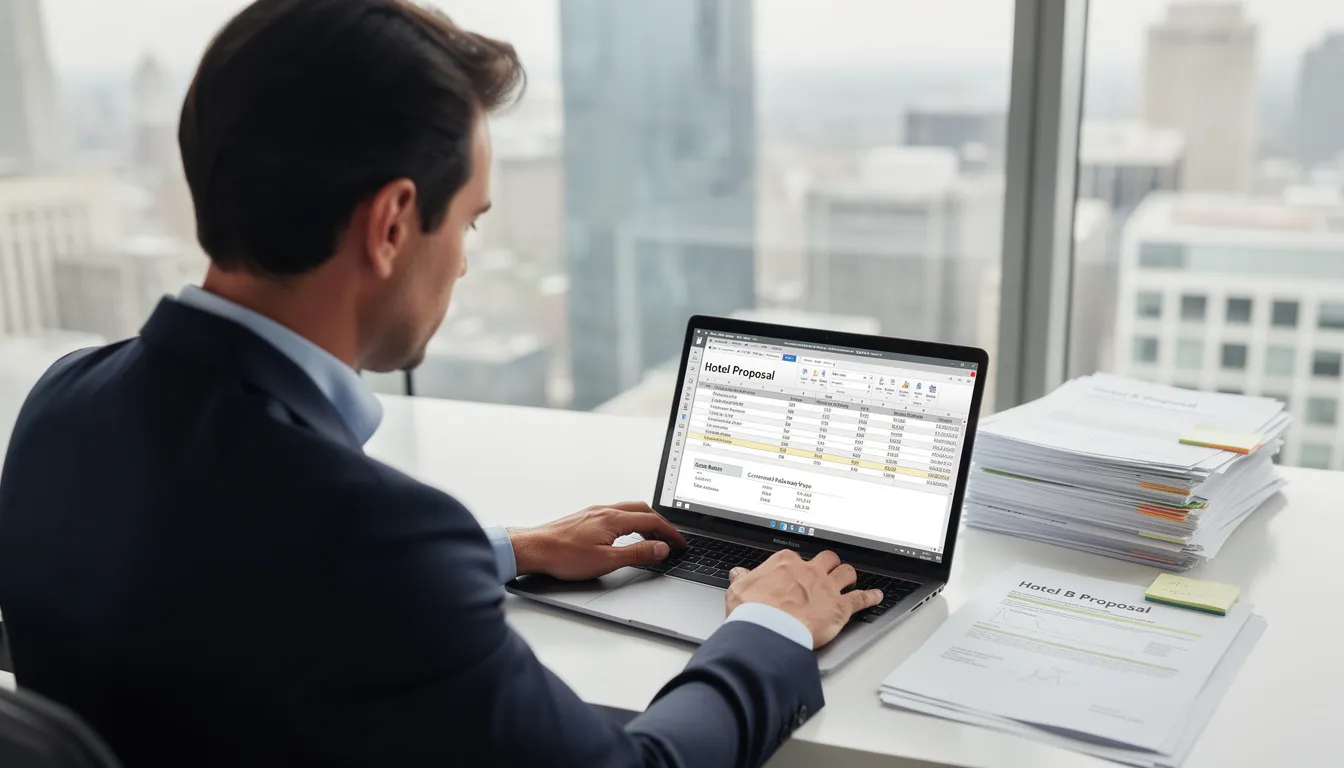
This is the most common corporate scenario there is: a training, offsite, or client meeting that needs a room block plus somewhere to actually meet. The mistake is pricing the pieces separately. Bundled, the rooms subsidize the meeting space; hotels routinely discount or waive meeting room rental when a block comes attached, or fold everything into a per-person meeting package covering the room, the meeting space, AV, and meals in one number.
Send every candidate hotel the same one-page spec so quotes come back comparable:
- Dates, with any flexibility noted, and rooms per night (e.g., 20 rooms, two nights)
- Meeting room needs: headcount, setup (boardroom, classroom, theater), and hours
- AV: screen, sound, video conferencing, and whether you’re live-streaming
- Food and beverage: coffee service, lunches, a group dinner, and any dietary requirements
- Billing: master account for rooms and events, or rooms to individual cards with events on the master
Then compare the all-in number, not the room rate, and ask each hotel what they’ll waive if the block fills: meeting room rental, AV fees, and a comp room per 20 booked are all standard concessions. If attendees book their own rooms, ask the hotel for a custom booking link or group code so registration is one click; hotels set these up routinely for corporate blocks, and we include it in every block we negotiate.
Team and per-budget packages
A variant worth knowing about: groups traveling on a fixed daily budget, sports teams, training cohorts, project crews, can ask hotels to build a package rate that lands inside the budget with meals included. If your team needs to stay at, say, $230 to $280 per person per night with breakfast, dinner, and snacks covered, say exactly that in the request. Full-service and suite-brand properties price to a target number all the time, bundling the room, hot breakfast, an evening meal or credit, and grab-and-go items, and quoting the budget up front gets you realistic proposals instead of a rate that fails once meals are added.
Booking accessible corporate blocks
When a corporate group includes attendees with disabilities, intellectual, developmental, or physical, the block request should say so up front, because the right hotels accommodate well and the wrong ones improvise badly. Specify the number of ADA rooms and their features (roll-in showers, visual alarms), ask for the block on lower floors or a quieter wing if sensory environment matters, brief the hotel on any support staff or companion room configurations, and put dietary requirements into the F&B spec. Hotels with strong group operations will assign a single event contact who’s briefed before arrival; make that assignment part of the contract. There’s no premium for asking, and the difference in attendee experience is enormous.
Need corporate rates without the RFP season?
Send us your dates, city, room count, and meeting needs. We’ll get quotes from multiple hotels, negotiate the terms above, and send you 2 to 4 side-by-side proposals. Commission-free for your company because hotels pay us.
Get My Corporate Group Rate Call (331) 314-9625Billing that keeps finance happy
Three clean models, pick per event: a master account puts rooms, meeting space, and F&B on one invoice to the company, best for offsites and trainings the company pays for. Individual pay on a group code keeps travelers on their own corporate cards at the negotiated rate, best for conferences where attendance is optional. The split model, rooms individual and event costs on the master, is the default for most client meetings. Whichever you use, set up direct billing before arrival, because hotels need a credit application processed ahead of time, not a debate at checkout.
One honest caveat about all of this: negotiated rates only save money if people use them. If your company sets up rates and travelers keep booking whatever a search engine shows them, the program is decorative. Keep the booking path simple, one link or code, and the compliance problem mostly solves itself.
When you’d rather not run the process at all, that’s the service. At Hotel Rates Direct, a real specialist takes your spec, quotes it to multiple hotels that fit, negotiates the rate, the terms, and the concessions, and sends you comparable proposals. It’s commission-free for your company because hotels pay us, and it works for corporate meetings, trade shows, and conferences worldwide. For choosing the venue side of a conference, our conference hotel booking guide goes deeper.
Frequently Asked Questions
How do I quote a corporate group rate for 20 rooms that includes meeting space?
Send one spec to multiple hotels: dates, 20 rooms per night, meeting room headcount and setup, AV needs, and food and beverage requirements. Ask for bundled pricing, since hotels discount or waive meeting room rental when a block is attached, and compare hotels on the all-in number rather than the room rate.
Which conference hotels offer the best corporate negotiated rates?
Hotels with dedicated conference facilities and group sales teams, which includes most full-service Marriott, Hilton, Hyatt, and IHG properties, negotiate the strongest bundled rates because rooms and meeting space price together. The best rate at any given property depends on your dates and volume, so the reliable method is quoting several comparable hotels against each other.
How much of a discount is a corporate negotiated rate?
Annual program rates typically run 10 to 25 percent below public rates and require roughly 50 or more room nights per year in a market. One-off group blocks of 10+ rooms run deeper, typically 15 to 35 percent, which is why smaller companies usually do better negotiating per event.
Can a small company get corporate hotel rates?
Yes, just not through the annual RFP route. Book group blocks for any meeting with 10 or more rooms, enroll in the hotel chains’ small business programs for individual trips, or use a group booking service to negotiate per event with no volume requirement.
What is last-room availability (LRA)?
An LRA rate applies as long as the hotel has any standard room unsold, while a non-LRA rate can be turned off on high-demand nights. LRA costs slightly more and usually earns it, because non-LRA discounts disappear exactly when public rates spike.
Can hotels build a package around a nightly budget with meals included?
Yes. State the target, for example $230 to $280 per person per night including meals, and full-service hotels will propose a package covering the room, breakfast, an evening meal or dining credit, and snacks. Quoting the budget up front produces realistic proposals instead of rates that break once meals are added.
What does a group booking service cost a company?
Nothing. Hotel Rates Direct is commission-free for companies because hotels pay the commission. You get multi-hotel quotes, negotiated terms including LRA and cancellation windows, custom booking links for attendees, and a specialist managing the block.
Get corporate group proposals this week
10+ rooms, with or without meeting space, any city worldwide. One short form and we respond ASAP with negotiated options. No obligation, no fees.
Request a Quote Call (331) 314-9625