

Hotels for Sports Teams: How to Book Tournament Travel Right
TL;DR
- A traveling team typically needs 15 to 25 rooms once players, coaches, and families are counted, which clears the 10-room group threshold at almost any hotel.
- The team checklist beats star ratings: free breakfast that opens before game time, free parking, kitchenette suites, laundry, a pool, and a short drive to the venue.
- Many youth tournaments run “stay-to-play” rules requiring teams to book through the event’s housing provider. Know whether your event does before you block anything.
- Suburban tournament-market rates usually run $100 to $180 per night with a group block, and the negotiables matter: a comp coach’s room, early breakfast, Sunday late checkout, and a meeting room for team dinners.
- For events without stay-to-play rules, a group booking service negotiates blocks at multiple hotels near the venue for you. Commission-free, because hotels pay the commission.
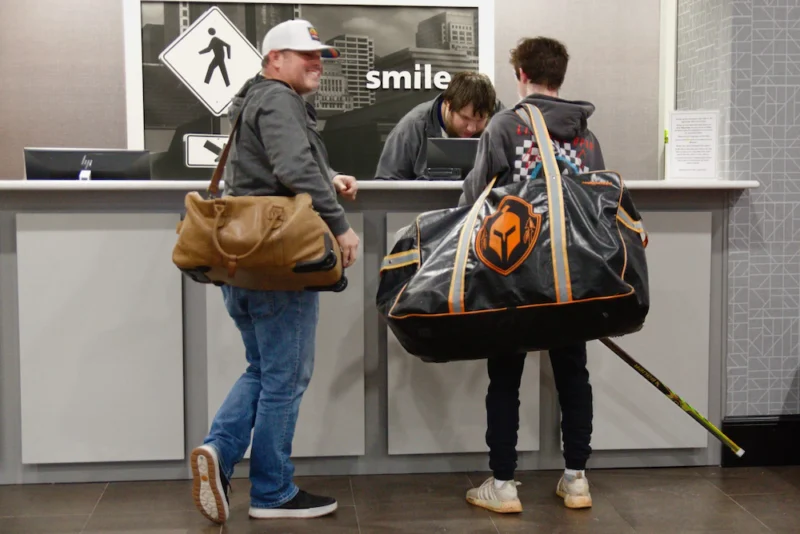
Every team manager knows the drill: the tournament schedule drops six weeks out, twelve families need rooms the same weekend everyone else’s twelve families do, and whoever volunteered to “handle hotels” inherits a group chat that never sleeps.
Team travel is its own category of group booking, with its own math, its own rules (looking at you, stay-to-play), and its own list of things that matter far more than what the hotel looks like in photos. Here’s how to get it right.
What sports teams actually need in a hotel
Forget the amenity list the hotel advertises. Rank properties on the things that decide whether a tournament weekend runs smoothly:
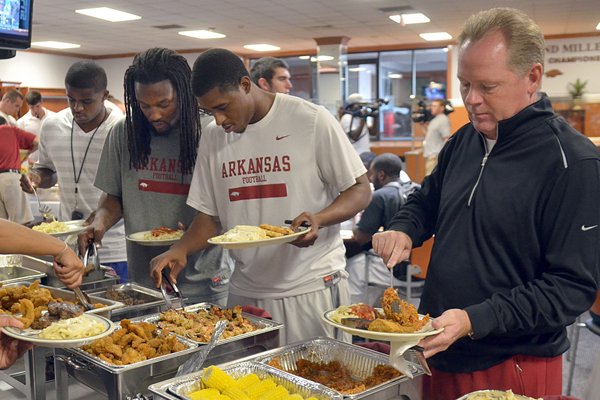
Breakfast that opens before warmups. An 8 a.m. game means eating at 6:30. Confirm the breakfast start time, and for group blocks, ask the hotel to open early on game days. Many will for a team block, and it’s worth more than a rate discount when the alternative is feeding fourteen kids at a gas station.
Free parking that fits the caravan. Teams arrive in minivans and SUVs, sometimes a trailer of gear. Downtown properties with $40 valet-only parking are the wrong tool.
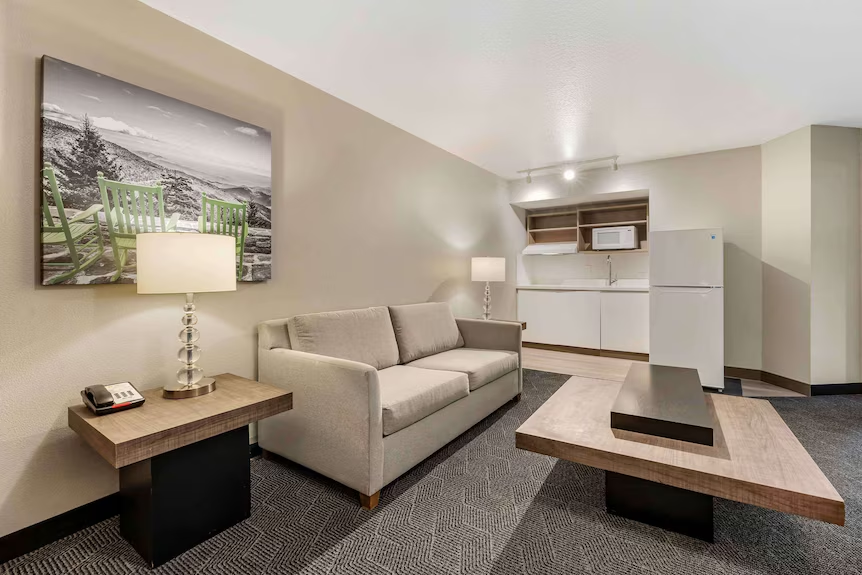
Suites with kitchenettes. One grocery run replaces a dozen restaurant meals over a three-night stay. For a 20-room block, in-room kitchens can save families a few thousand dollars collectively, which keeps the travel season affordable enough that everyone comes back next year.
Laundry on site. Anyone who’s smelled a hockey bag on day three understands.
A pool, and a floor plan that contains the chaos. The pool is where the team burns energy between games. Ask the hotel to place the block on the same floor or wing; it makes curfew enforceable and keeps other guests from filing complaints about a hallway scrimmage.
Fifteen minutes or less to the venue. Tournament mornings are chaos multiplied by traffic. Closer beats nicer.
Which hotel types work best for teams?
| Hotel Type | Examples | Why Teams Pick Them |
|---|---|---|
| Extended-stay suites | Residence Inn, Homewood Suites, TownePlace Suites, Home2 Suites | Kitchens, free breakfast, laundry, and space for families sharing rooms |
| Two-room suite brands | Embassy Suites | Separate living area for parents, cooked breakfast, evening reception the adults appreciate |
| Value brands with hot breakfast | Hampton Inn, Holiday Inn Express, Drury Inn | Lowest group rates with breakfast and parking included; Drury adds free evening food |
| Tournament-hub properties | Hotels attached to or beside sports complexes (e.g., South Point or The Orleans in Vegas) | Sleep upstairs from the games; zero morning logistics |
For Vegas tournaments specifically, our Vegas group hotels guide covers the team-friendly and non-gaming options in that market.
Stay-to-play: the rule that changes everything
Before you block a single room, answer one question: does your tournament have a stay-to-play policy?
Many large youth tournaments require out-of-town teams to book through the event’s official housing provider to be eligible to compete. The tournament partners with a housing company, that company controls blocks at approved hotels, and teams booking outside the system can be charged extra fees or, at strict events, lose their spot. Tournaments do this because housing rebates fund the event, so it’s not going away.
How to work with it: check the tournament’s housing rules the day registration opens, book inside the system early (the good hotels in the approved list go first), and compare the approved options against each other using the checklist above, since approved lists usually include everything from great extended-stay properties to tired roadside stock at the same “tournament rate.” If a listed rate looks high, it sometimes is; you just can’t do anything about it at a strict stay-to-play event except pick the best property on the list, fast.
For tournaments, leagues, and travel weekends without housing requirements, which is still most of team travel, you’re free to negotiate your own block, and that’s where the real savings live.
Room block math for a traveling team
Teams underestimate their own size. A 14-player roster travels as 14 families plus coaching staff, and families don’t share with each other. The working numbers: one room per family, one per coach, and a spare or two for the team manager and late additions. A typical youth team blocks 15 to 25 rooms, and a multi-team club weekend can run 60+, which is serious negotiating leverage.
Ask for a courtesy block: rooms held at the group rate with no money down, each family booking and paying with the team’s group code, and unbooked rooms releasing automatically at the cutoff, usually 30 days out. The team manager coordinates but never fronts money or chases payments. Set the internal booking deadline a week before the hotel’s real cutoff, because there is always one family that books at the deadline plus one day.
What team hotel blocks cost, and what to negotiate
In the suburban markets where most tournaments happen, negotiated team blocks generally land between $100 and $180 per room per night, below the public rate by 15 to 35 percent, with big swings for the event calendar (a national qualifier fills every hotel within 20 minutes of the complex). Book the day the schedule is announced; team demand is synchronized, and every other team in your bracket needs the same nights.
Then negotiate the team package, because hotels grant these routinely for team blocks:
- A comp room per 20 booked, which usually covers the head coach
- Early breakfast opening on game days
- Late checkout Sunday, since finals run past noon and kids need somewhere to shower
- A meeting room for team dinners, film sessions, or the end-of-season party
- Block placement on one floor, with cooler and ice access
Managing hotels for your team?
Send us your tournament city, dates, and room count. We’ll negotiate blocks at team-friendly hotels near the venue and send you 2 to 4 proposals. Commission-free for you because hotels pay us.
Get My Team’s Group Rate Call (331) 314-9625The team manager’s booking playbook
Pulling it together, the sequence that works: the day the tournament is announced, check for stay-to-play rules. If the event controls housing, book the best approved property immediately. If it doesn’t, define your block (rooms, nights, budget, must-haves from the checklist), get quotes from multiple hotels near the venue rather than taking the first number, and lock a courtesy block with the team perks negotiated in. Then share one booking link with families, one deadline, and one reminder before the cutoff.
The multi-hotel shopping is the step most volunteer managers skip, because it’s hours of calls on top of a day job. That’s the part we take. At Hotel Rates Direct, a real specialist contacts team-friendly hotels near your venue, negotiates rates, perks, and block terms, and sends you side-by-side proposals, commission-free for you, because hotels pay us. Every family books their own room with your team’s code, and it works for any sport, any age group, worldwide. Start at our sports team hotel booking page, or read how group booking works for the general mechanics.
Frequently Asked Questions
How many hotel rooms does a sports team need?
Count one room per traveling family plus one per coach, not one per player. A 14-player youth roster typically needs 15 to 25 rooms once families and staff are included, which qualifies for group block pricing at nearly any hotel.
What is stay-to-play in youth sports?
A tournament policy requiring out-of-town teams to book through the event’s official housing provider to be eligible to compete. Housing rebates help fund the event. If your tournament is stay-to-play, book inside the approved system early and choose the best property on the list; if it isn’t, you’re free to negotiate your own block.
What should teams look for in a tournament hotel?
Breakfast that opens before game time, free parking, kitchenette suites, on-site laundry, a pool, block placement on one floor, and a drive of 15 minutes or less to the venue. Those factors decide the weekend far more than star ratings do.
How much do team hotel blocks cost?
In typical suburban tournament markets, negotiated blocks run $100 to $180 per room per night, usually 15 to 35 percent below public rates. Big events near major complexes push rates up, so book the day the schedule is announced.
Does the team manager have to pay for all the rooms?
No. With a courtesy block, the hotel holds rooms at the group rate with no deposit, each family books and pays with the team’s group code, and unbooked rooms release at the cutoff date. The manager coordinates without fronting money.
What does a group booking service cost for a team?
Nothing for you. Hotel Rates Direct is commission-free for teams because hotels pay the commission. You get negotiated rates at multiple hotels near the venue, team perks in the contract, and a specialist managing the block, and families pay only their room rate.

Get your team’s hotel block quote
Any sport, any tournament city, 10+ rooms. One short form and we respond ASAP with negotiated options near your venue. No obligation, no fees.
Request a Quote Call (331) 314-9625